Ullswater Ecology Education Project
Students from Ullswater Community College and Queen Elizabeth Grammar School are taking their science learning out of the classroom and onto the Ullswater shoreline.
The Ullswater Ecology Education Project introduces secondary-school students to the freshwater life of the lake through practical fieldwork. Working with the Field Studies Council, teachers and trained FOUW volunteers, students collect shoreline samples, identify freshwater invertebrates and learn how repeated observations can help us understand ecological change.
The project builds on FOUW’s Lakefly community-monitoring programme, connecting classroom learning with the continuing study of Ullswater.
The initial programme brought together 25 students from the two Penrith secondary schools, with field teaching designed and delivered by the Field Studies Council at Blencathra.
Additional funding from the Lake District Foundation will enable the project to continue into 2027, with the aim of reaching the original target of 60 students.
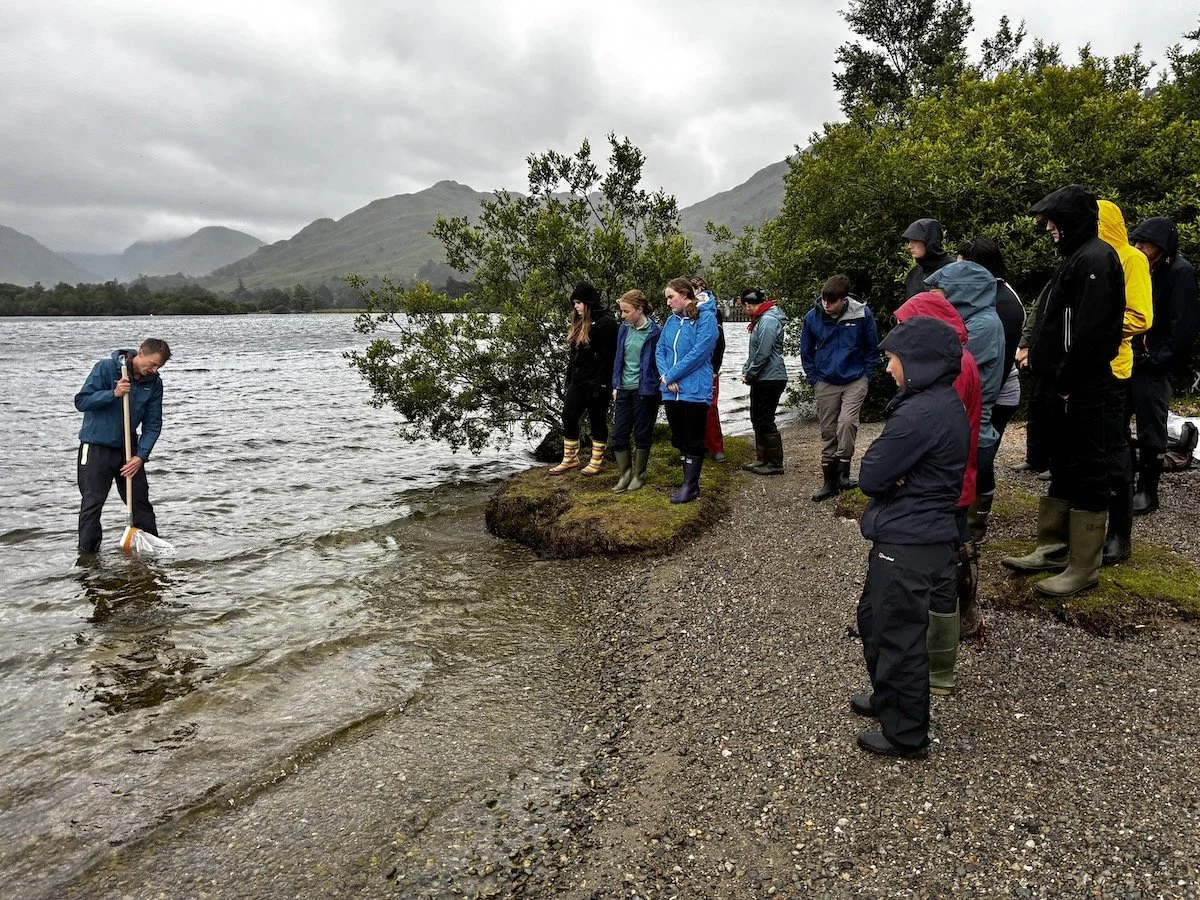
Students from Ullswater Community College and Queen Elizabeth Grammar School investigate freshwater life during fieldwork on the Ullswater shoreline.
Learning from the lake itself
Ullswater is an important part of life in the valley, but much of its freshwater ecology remains hidden beneath the surface.
Fieldwork gives students the opportunity to look more closely. A tray containing lake water, leaves and gravel can reveal mayfly larvae, freshwater shrimp, snails, beetles, worms and many other animals that form part of the lake’s food web.
By collecting, identifying and recording these animals, students develop practical scientific skills while exploring locally relevant questions:
The aim is not simply to teach a sampling method. It is to help young people develop curiosity, confidence and a more informed connection with the lake on their doorstep.
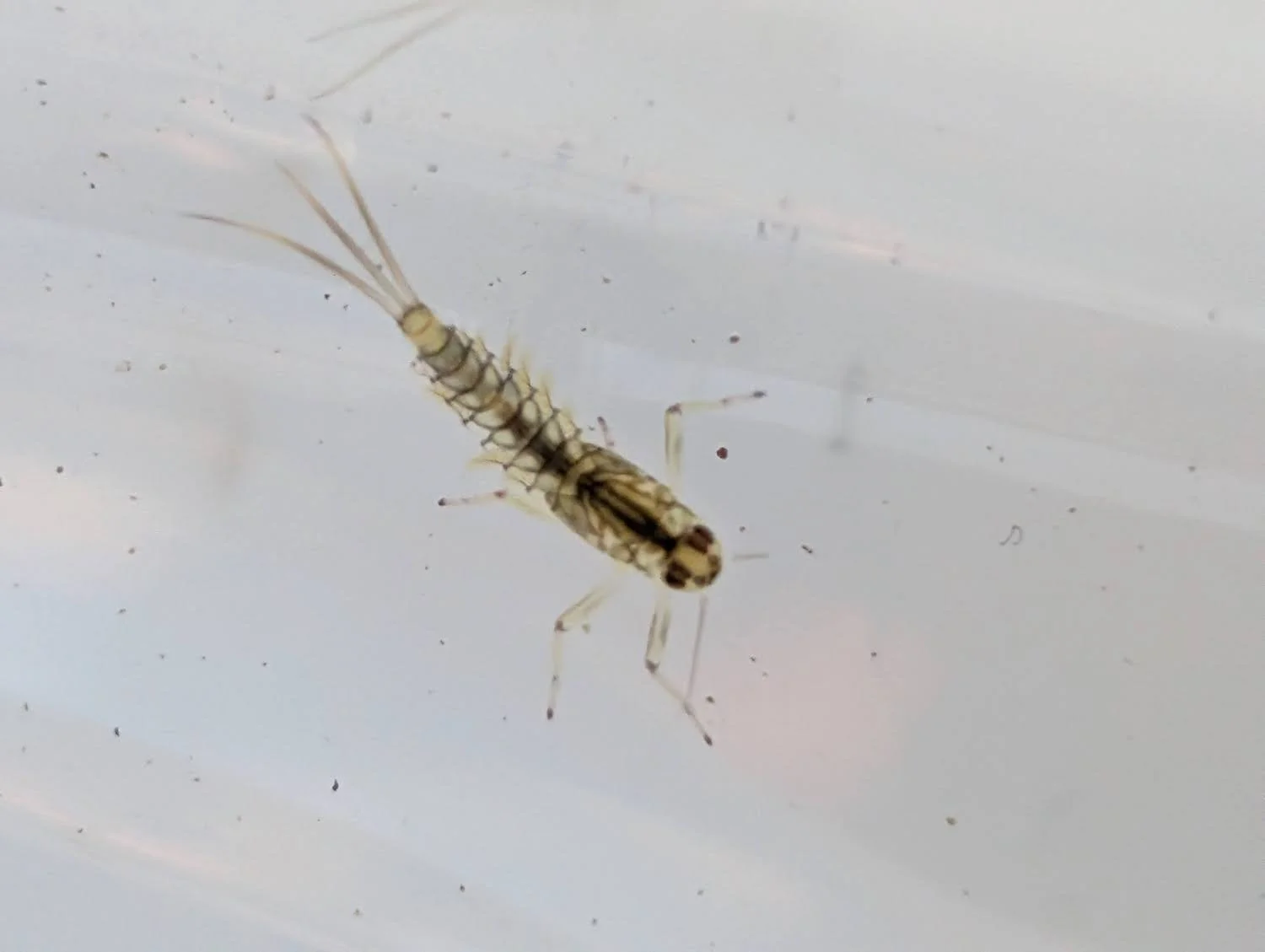
Examples of an olive mayfly studied through the Lakefly method. This specimen was photographed separately from the school field day.
From classroom learning to lakeshore fieldwork
The programme has been designed by the Field Studies Council at Blencathra in partnership with the schools and FOUW.
Students are introduced to Ullswater’s freshwater ecosystem, its invertebrate communities and some of the pressures that can affect lakes.
They learn how shoreline samples are collected, sorted and recorded using the Lakefly identification guide.
Students carry out supervised fieldwork supported by teachers, Field Studies Council staff and trained FOUW volunteers.
The sample is sorted into broad freshwater-invertebrate groups and the observations are recorded.
Students consider what their observations show, what remains uncertain and why repeated monitoring is more useful than a single result.
The fieldwork links with the continuing surveys carried out by FOUW’s Lakefly volunteers around Ullswater.
A first for Ullswater
The initial programme created a new connection between local secondary-school science and practical freshwater fieldwork at Ullswater.
What did the first field day achieve?
The first field day took place in June 2026 at two Ullswater shoreline sites. Despite strong winds and rain, students completed the practical programme and successfully collected, sorted and recorded a range of freshwater invertebrates.
Their Lakefly scores were within the range being recorded by FOUW’s volunteer monitors. This was an encouraging first exercise, but a single score cannot classify the lake water as healthy or unhealthy.
The value of the day lay in carrying out the full scientific process: collecting a sample carefully, identifying what was found, recording the results and considering how confidently those results could be interpreted.
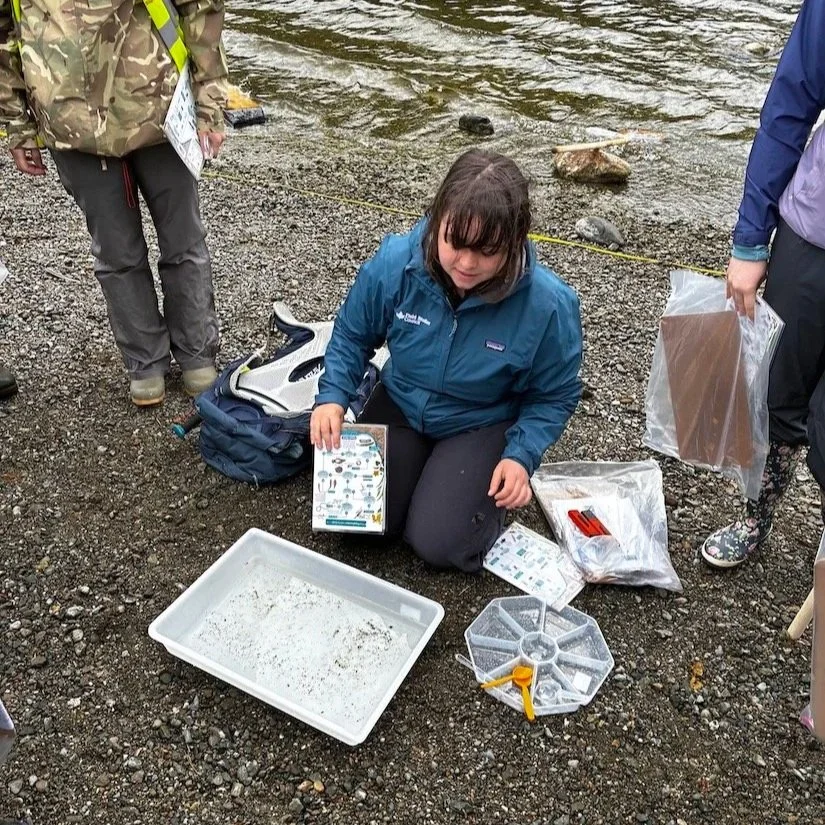
A student sorts their samples and uses the Lakefly guide to identify the broad freshwater-invertebrate groups they have found.
Sharing local experience: Volunteers, teachers and specialist support
FOUW’s trained Lakefly volunteers provide practical support during the fieldwork. They help students use the equipment, sort samples and recognise the broad invertebrate groups used by the method.
The project brings together different kinds of experience. The Field Studies Council provides the educational and field-teaching expertise; teachers connect the work with school learning; and FOUW volunteers share practical knowledge developed through regular monitoring around Ullswater.
FOUW does not deliver the programme alone. Its role is to help bring the partnership together, contribute funding, connect the schools with the local monitoring programme and support the practical sessions.
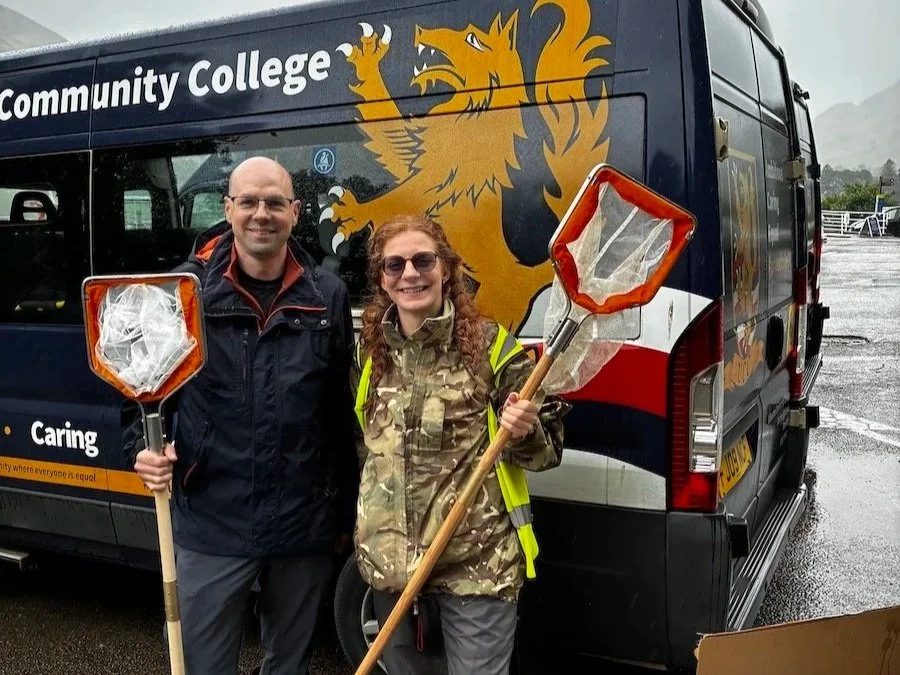
Field tutors with sampling nets helped students learn how to use the Lakefly method and collect freshwater invertebrates from the Ullswater shoreline.
Building a continuing programme
The first field day was designed as the beginning of a continuing programme linking the schools with field educators and FOUW’s local monitoring work.
Give students further opportunities to collect and compare observations from Ullswater’s shoreline.
Develop ways for the fieldwork, identification skills and results to support teaching within both schools.
Link the students’ practical experience with the continuing work of FOUW’s Lakefly volunteers.
Use feedback from students, teachers and project partners to understand what worked well and what should be developed.
Explore the funding and partnership support needed to continue the programme beyond its initial year.
Partners and project support
Education and field teaching
Field Studies Council, Blencathra designed and delivered the bespoke freshwater ecology field programme with the two schools.
Queen Elizabeth Grammar School
FOUW Lakefly volunteers
Lake District Foundation
Friends of the Ullswater Way
The Environment Agency supplied ten complete sampling kits for the schools, while grants from Westmorland and Furness Council and the Lake District Foundation supported the initial programme.
The fieldwork uses the Lakefly method and identification resources originally developed by the Freshwater Biological Association.